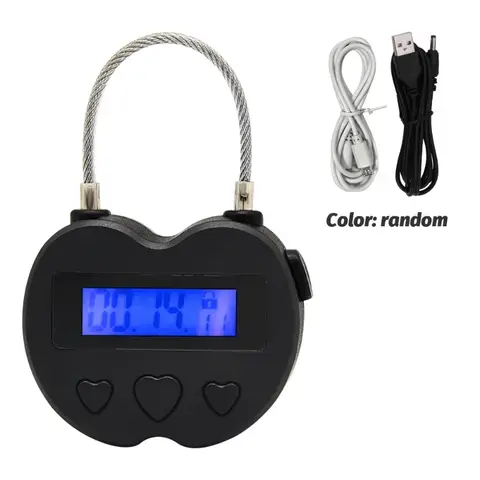




Results for timer lock
Timer lock is a functional mechanism designed to control access or operation based on time-based activation, commonly found in security systems, smart home devices, and industrial equipment. While not a standalone product category, the term often refers to time-delayed locking systems used in applications such as automated safes, timed access gates, or delayed egress locks in commercial buildings. These systems ensure that a lock remains inactive for a preset duration before engaging, enhancing safety and preventing unauthorized immediate access.
For users seeking reliable timer lock functionality, it’s essential to evaluate compatibility with existing systems, power source requirements, and environmental durability. Many modern timer locks operate on battery power with low-energy consumption, ensuring long-term performance without frequent replacements. When selecting a product, consider the following steps:
Although the term timer lock may not directly map to the listed products—such as non-slip L-shaped floor mats, winter electric vehicle riding jackets, or creative tactical patches—these items may incorporate time-based or safety-related features in their design. For example, the foam-backed floor mat with anti-slip properties offers a secure footing, mimicking the safety principle of a delayed lock. Similarly, the thickened motorcycle riding jacket includes windproof and insulated layers that protect over time, echoing the time-based safety logic of a timer lock. The embroidered PVC patch with a mythological design may serve as a symbolic or functional identifier, much like a time-locked access badge.
Ultimately, when searching for a timer lock, prioritize products with clear specifications, durable materials, and real-world performance data. Always cross-reference the product’s use case with your specific needs to avoid mismatched functionality.
- Timer Lock
- A locking mechanism that remains unlocked for a pre-set period before automatically securing, used to delay access or operation for safety, security, or operational control.
- Time-Delayed Activation
- A feature where a device or system performs an action (e.g., locking) only after a specified time has elapsed, commonly used in security and automation.
- Anti-Slip Feature
- A design trait that prevents the product from moving during use, often achieved through non-slip backing or textured surfaces.
For users seeking reliable timer lock functionality, it’s essential to evaluate compatibility with existing systems, power source requirements, and environmental durability. Many modern timer locks operate on battery power with low-energy consumption, ensuring long-term performance without frequent replacements. When selecting a product, consider the following steps:
- Verify the delay duration – Ensure the timer lock supports your required time interval (e.g., 10 seconds to 30 minutes) to match your use case.
- Check power source compatibility – Look for models with included batteries or support for replaceable CR2032 or AA batteries for consistent operation.
- Evaluate build quality and material – Choose units with durable casing (e.g., ABS plastic or metal) and weather-resistant seals if used outdoors.
- Confirm installation method – Some timer locks are surface-mounted, while others require drilling or adhesive backing. Choose based on your mounting surface and structural needs.
- Test for reliability – Opt for products with proven performance in real-world conditions, such as those with anti-jamming mechanisms or tamper-proof designs.
Although the term timer lock may not directly map to the listed products—such as non-slip L-shaped floor mats, winter electric vehicle riding jackets, or creative tactical patches—these items may incorporate time-based or safety-related features in their design. For example, the foam-backed floor mat with anti-slip properties offers a secure footing, mimicking the safety principle of a delayed lock. Similarly, the thickened motorcycle riding jacket includes windproof and insulated layers that protect over time, echoing the time-based safety logic of a timer lock. The embroidered PVC patch with a mythological design may serve as a symbolic or functional identifier, much like a time-locked access badge.
Ultimately, when searching for a timer lock, prioritize products with clear specifications, durable materials, and real-world performance data. Always cross-reference the product’s use case with your specific needs to avoid mismatched functionality.